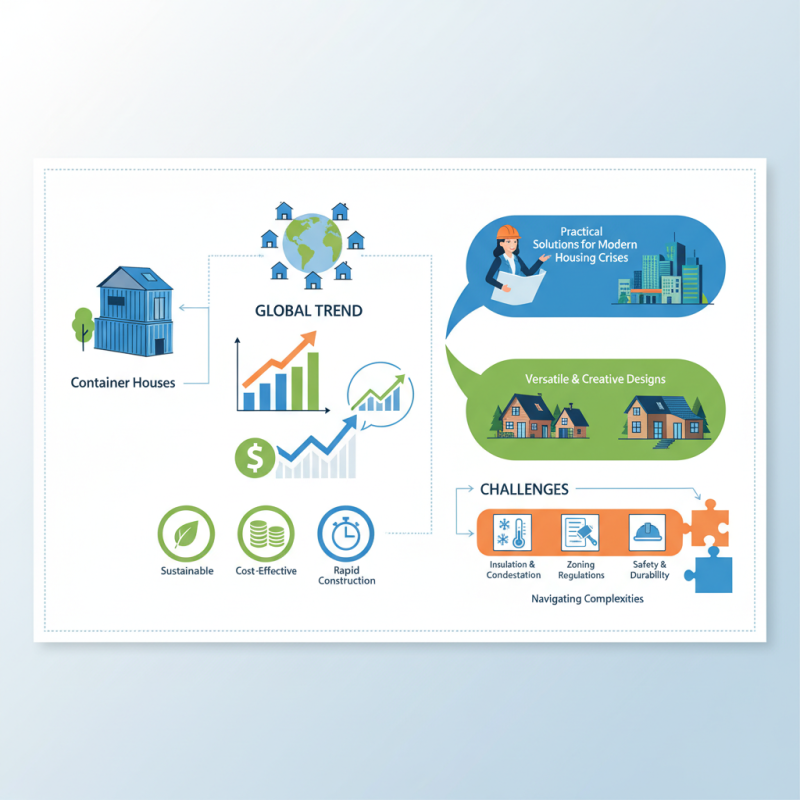
Container houses are increasingly gaining traction worldwide as an innovative solution to housing shortages. According to a recent report by MarketsandMarkets, the global modular construction market is predicted to reach $157 billion by 2023, a clear indicator of this trend. These homes are sustainable, cost-effective, and can be constructed rapidly. "Why are container houses becoming popular?" This question looms large in conversations about future living spaces.
Expert architect Sarah Johnson states, “Container homes are not just a trend; they offer practical solutions for modern housing crises.” Her insight reflects the growing belief that container houses can aid in addressing issues such as affordability and environmental impact. The versatility of these homes allows for creative designs, from urban lofts to cozy retreats, catering to diverse lifestyles.
However, the rise of container homes isn’t without its challenges. There are concerns about insulation, condensation, and zoning regulations. Builders and buyers must navigate these complexities to fully realize the potential of container housing. As this movement grows, so does the need for best practices to ensure safety and durability in these unconventional structures.
The Evolution of Container Houses: A Global Perspective
Container houses have evolved significantly over the years. Once seen as simple solutions for temporary housing, they now reflect innovation in design and sustainability. Architects worldwide are reimagining these structures, transforming steel boxes into stylish homes. The durability of shipping containers makes them ideal for various climates, from the deserts of California to coastal regions.
Sustainability plays a key role in their rise. Many builders favor these homes for their low environmental impact. They require less energy during construction and can be outfitted with solar panels. However, challenges remain. Insulation can be tricky in extreme temperatures. Future innovations must address these issues more effectively.
Cultural perceptions of container living are changing too. In urban areas, they symbolize modernity and flexibility. Communities appreciate their affordable nature. Yet, some view container homes as mere trends. This raises questions about longevity and community integration. Will these houses retain their appeal as styles evolve? Only time will tell.
Affordability and Cost-Effectiveness of Container Housing Solutions
Container houses are becoming increasingly popular due to their affordability and cost-effectiveness. These homes provide a unique solution to housing shortages. Their initial cost is often lower than traditional homes. Many people find the reduced expenses appealing. Additionally, they require less time for construction. This efficiency attracts those in need of quick housing solutions.
The versatility of container homes also plays a role in their appeal. These structures can be customized to fit various needs. Some now serve as cozy family homes, while others operate as trendy offices or cafes. However, building codes can complicate this process. It’s essential to navigate local regulations for proper permits. This challenge can be daunting for some potential buyers.
Sustainability is another factor influencing the rise of container houses. Reusing shipping containers reduces waste and promotes eco-friendly living. However, potential issues like insulation and ventilation are often overlooked. Many individuals need to conduct thorough research to address these concerns effectively. As more people become aware of these eco-friendly options, the demand for container homes will likely continue to grow.
Sustainability and Environmental Benefits of Using Shipping Containers
Container houses are captivating eyes due to their unique design and sustainability advantages. Utilizing shipping containers reduces waste, repurposing materials that would otherwise contribute to landfill. According to a report by the World Bank, construction waste accounts for nearly 30% of landfill waste globally. By converting containers into homes, we can actively mitigate this crisis.
The energy efficiency of container homes is another appealing aspect. A study from the American Institute of Architects indicates that they can consume 60% less energy compared to traditional housing. This means lower utility bills and a reduced carbon footprint. Additionally, insulation improvements can further increase energy conservation. With rising energy costs, it becomes crucial to consider these options.
**Tips:** Consider local climate when designing your container house. Proper insulation can maximize energy efficiency.
Container homes pose challenges. They can be subject to significant thermal fluctuations. Sometimes, this can lead to discomfort or increased energy usage. Proper planning and design must address these potential issues to achieve the intended benefits. Creative and thoughtful adaptations can enhance the living experience within these innovative structures.
Versatility in Design: Customization Opportunities for Container Homes
Container houses are becoming a popular choice for both homeowners and builders. One major reason for their rise is the customization opportunities they offer. Designers and architects can manipulate the structure of a shipping container in countless ways. This allows for unique configurations that cater to individual tastes and needs.
People can create multi-story homes, cozy studios, or expansive family spaces from the same basic unit. The flexibility of container design also appeals to sustainability-focused buyers. Reusing materials like shipping containers reduces waste. However, it’s important to remember that not every design is practical. Staffing is crucial. Not all designs will meet local building codes or climate challenges.
Incorporating features like windows, insulation, and ventilation systems is vital for livability. Buyers should seek advice from professionals to ensure success. Engaging with skilled builders can enhance the end result. Customization can lead to costly mistakes if not planned properly. It’s a blend of creativity and practicality that can transform these containers into functional living spaces.
Why Are Container Houses Gaining Popularity Worldwide? - Versatility in Design: Customization Opportunities for Container Homes
| Feature |
Description |
Customization Options |
Popularity Rating (1-10) |
| Eco-Friendliness |
Utilizes recycled materials, reducing waste. |
Green roofs, solar panels, rainwater harvesting. |
9 |
| Cost-Effective |
Lower construction costs compared to traditional homes. |
Modular designs, multi-unit configurations. |
8 |
| Mobility |
Can be transported easily to different locations. |
Custom layouts for moving or stacking containers. |
7 |
| Modern Design |
Sleek, industrial aesthetic appealing to many. |
Interior finishes, exterior modifications, landscaping. |
8 |
| Quick Construction |
Rapid build times compared to traditional homes. |
Pre-fabricated units, plug-and-play utilities. |
9 |
Urbanization and Housing Demand: The Role of Container Houses
Container houses are becoming a prominent solution in urban areas. The rapid growth of cities has led to a pressing housing demand. Traditional construction methods struggle to keep pace with the needs of expanding populations. In this context, container houses offer a flexible and efficient alternative. They are quickly deployed and can be customized easily to fit various needs.
Urbanization creates challenges, including rising costs and limited space. Container homes utilize repurposed shipping containers, reducing material waste. These homes can be stacked or arranged creatively to maximize land use. However, they also face challenges, like insulation and climate control. Owners need to consider these factors carefully.
The affordability of container houses makes them appealing. They often require less investment than traditional homes. This accessibility can provide housing for those in need. Yet, not everyone sees them as desirable. Some perceive container homes as temporary or lacking in aesthetics. Urban planners are still researching their potential and impact. More discussions are needed to address concerns about living quality and community integration.
Global Container House Popularity
FAQS
: Using shipping containers reduces waste and repurposes materials that would otherwise end up in landfills.
They can consume 60% less energy, leading to lower utility bills and a smaller carbon footprint.
They may experience significant thermal fluctuations, which can affect comfort and energy use. Proper design helps.
Yes, they can be adjusted for unique layouts and features, but practicality must be considered for success.
They are quickly deployable and customizable, making them a flexible solution for rapid urban population growth.
Some see them as temporary or lacking in aesthetics. More discussions are needed about their living quality.
Yes, engaging skilled builders can prevent costly mistakes and enhance the final result significantly.
Local climate plays a crucial role in maximizing energy efficiency through proper insulation techniques.
Some people view them as less desirable due to aesthetics or believe they aren't durable, which merits further discussion.
Windows, insulation, and ventilation systems are vital to create a comfortable living environment.
Conclusion
Container houses are gaining popularity worldwide for several compelling reasons. First and foremost, they offer an affordable and cost-effective housing solution, addressing the pressing need for affordable living spaces in urban areas. As cities expand and housing demand rises, container homes provide a quick and efficient way to create livable structures without the high costs associated with traditional construction methods.
Moreover, the sustainability and environmental benefits of using repurposed shipping containers contribute significantly to their appeal. These homes utilize materials that would otherwise sit idle, reducing waste and promoting eco-friendly living. Additionally, the versatility in design allows for extensive customization, catering to various aesthetic preferences and functional needs. In summary, understanding why container houses are becoming popular reveals a convergence of affordability, sustainability, and adaptable design, making them an attractive option in today's housing landscape.

 BYT Homes