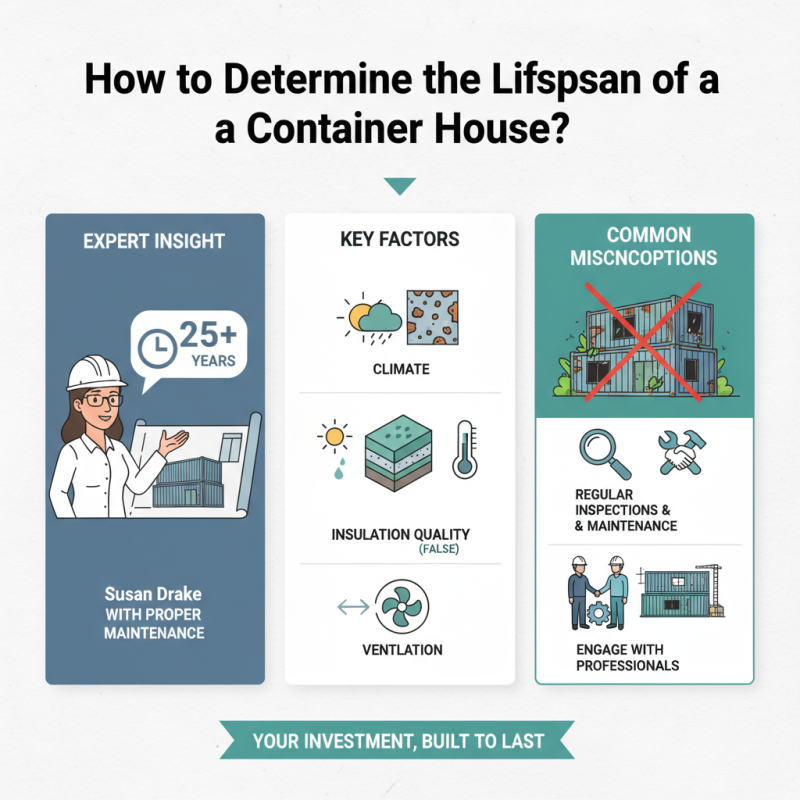
Container houses are gaining popularity as a sustainable living option. However, many potential buyers ask, "what is the lifespan of a container house?" Susan Drake, a leading architect specializing in container homes, states, "With proper maintenance, a container house can last over 25 years." This insight sheds light on the factors that affect the longevity of these innovative structures.
The durability of a container house depends on various elements. Climate plays a key role; homes in coastal areas may face rust issues. Additionally, the quality of insulation affects both comfort and lifespan. Proper ventilation can also prolong a container's life. Prospective owners should be aware of these factors. It's essential to engage with experts during the design process to address these challenges.
Many assume that container homes are easily neglected. This assumption could lead to shorter lifespans. Regular inspections and maintenance are necessary to prevent deterioration. Understanding "what is the lifespan of a container house?" means acknowledging the work involved. Engaging with professionals ensures that your investment lasts long into the future.
Factors Influencing the Lifespan of a Container House
When assessing the lifespan of a container house, various factors come into play. The material durability is paramount. Steel, the primary material, can last an impressive 25 to 30 years with proper maintenance. However, rust and corrosion can significantly shorten this lifespan, especially in humid environments. Regular inspections and timely protection measures are vital to prevent deterioration.
Another critical factor is insulation quality. Poor insulation can lead to increased energy costs and potential moisture issues, impacting the overall structure. The right insulation materials can extend the life of a container house considerably. According to industry reports, homes with effective insulation systems have seen a lifespan increase of up to 15 years.
Lastly, environmental conditions should not be overlooked. Container homes located in areas prone to extreme weather face greater challenges. High winds, heavy rains, and temperature fluctuations can cause wear and tear. Homeowners should consider adding protective features like windbreaks and upgraded roofing. These adjustments can contribute to the longevity and sustainability of a container house. Reflections on design choices and their implications can lead to better outcomes in the long run.
Materials Used in Container House Construction
Container houses are gaining popularity for their sustainability and affordability. The materials used in container house construction play a crucial role in determining their lifespan. Typically, steel is the primary material in shipping containers. According to the American Institute of Steel Construction, steel can last over 50 years if properly maintained. However, exposure to moisture and air can cause rust. Regular maintenance, such as painting and sealing, can extend the life of a steel container.
In addition, insulation materials are vital. Spray foam and rigid board insulation are common choices. These materials help regulate temperature and protect against moisture. A report from the Department of Energy states that proper insulation can increase energy efficiency by up to 30%. Yet, not all insulation is created equal. Some materials may deteriorate over time, requiring replacement.
Moreover, the type of foundation can affect the container house's durability. A poor foundation may lead to structural issues. Research from the National Association of Home Builders indicates that a sound foundation can improve a home’s lifespan by 10 to 20 years. Decisions about materials and construction methods should consider local climate and soil conditions. In many cases, balancing cost and quality requires thoughtful reflection. Choosing the right materials sets the stage for a long-lasting, resilient container home.
Environmental Conditions Affecting Durability
When determining the lifespan of a container house, environmental conditions play a significant role. Temperature fluctuations significantly affect the materials used in construction. Reports from the Housing Association indicate that extreme heat can cause metals to expand and warp. In contrast, freezing temperatures can lead to cracking in any concrete components. Regions with severe weather demand more durable materials and better insulation methods to enhance longevity.
Moisture is another critical factor impacting durability. Container houses located in humid climates are at higher risk of rust and mold growth. According to the Environmental Protection Agency, 50% of all moisture-related problems occur in homes due to poor ventilation. Proper sealing and ventilation systems are essential. Homes near coastal areas need to consider salt exposure, which can accelerate corrosion.
UV exposure also cannot be overlooked. Prolonged sun exposure can degrade cladding materials, reducing their effectiveness. A report by the International Living Future Institute emphasizes that continuous UV exposure can limit the lifespan of traditional paint and coatings. Consequently, it’s vital to choose appropriate finishes and conduct regular maintenance to prevent wear. Understanding these environmental challenges is crucial for assessing the longevity of container homes.
Maintenance Practices to Extend Lifespan
Container houses can offer unique living solutions. However, maintaining them is key to longevity. Regular checks on the exterior are essential. Look for rust, dents, or paint peeling. Addressing these issues early can prevent larger problems down the line.
Proper insulation is another critical factor. It helps regulate temperature and reduces energy costs. Ensure seals around windows and doors are intact. Inspecting insulation material periodically can save you money. Neglecting this could lead to mold or structural weaknesses.
Landscaping also plays a role in a container home's lifespan. Keep vegetation a safe distance from the structure. It helps avoid moisture build-up, which can be damaging. Think about drainage too. Ensure that rainwater flows away from the containers effectively. These steps can make a significant difference over time.
How to Determine the Lifespan of a Container House? - Maintenance Practices to Extend Lifespan
| Maintenance Practice |
Frequency |
Impact on Lifespan |
Estimated Lifespan Extension |
| Rust Inspection |
Quarterly |
Prevents structural deterioration |
5 years |
| Sealant Reapplication |
Annually |
Enhances weather resistance |
3 years |
| Drainage System Check |
Bi-Annually |
Prevents flooding and moisture damage |
4 years |
| Insulation Condition Review |
Every 3 years |
Maintains temperature control |
6 years |
| Paint Touch-ups |
Every 2 years |
Aesthetic appeal and rust prevention |
2 years |
Signs of Deterioration in Container Houses
Container houses offer a unique approach to affordable living, but signs of deterioration can signal issues that affect their lifespan. One critical area to monitor is rust. The metal surfaces are prone to corrosion when exposed to moisture. According to a report from the International Code Council, regular inspections can identify rust early, allowing for timely treatments. If left unchecked, rust can compromise structural integrity.
Another area to watch for is insulation degradation. Over time, exposure to extreme temperatures may cause insulation materials to break down. This can lead to energy inefficiency and increased utility costs. A study by the National Association of Home Builders suggests that proper insulation maintenance can extend the typical lifespan of container homes. Keep an eye out for condensation or mold growth, as these also indicate insulation failure.
Window seals are equally important. A compromised seal can lead to leaks and increased heating or cooling demands. Monitoring for drafts or visible water damage around windows can prevent more significant problems. An industry report indicates that most container houses need seal replacements every five to seven years. Understanding these deterioration signs can help homeowners take proactive steps toward maintaining their investment.
FAQS
: Temperature fluctuations and moisture significantly impact durability. Extreme heat and freezing temperatures can damage materials.
High humidity increases the risk of rust and mold. Poor ventilation can lead to moisture-related issues.
Regular checks for rust, dents, and peeling paint are essential. Early action prevents larger issues later.
Proper insulation regulates temperature and cuts energy costs. Inspect seals and insulation material periodically.
Yes, keeping vegetation away helps prevent moisture build-up. Effective drainage is crucial for protecting the structure.
Rust appears when metal surfaces are exposed to moisture. Early inspections help treat rust and maintain integrity.
Look for condensation or mold growth. These signs indicate that insulation may be failing and needs attention.
Compromised seals can cause leaks and increase energy demands. Monitoring drafts helps prevent significant problems.
Window seals typically need replacement every five to seven years. Regular checks can help avoid leaks and damage.
Regular exterior checks, proper insulation, and effective drainage contribute to longevity. Neglect can lead to serious issues.
Conclusion
Determining the lifespan of a container house involves several key factors that contribute to its durability. The materials used in construction play a significant role; high-quality steel and insulation can enhance longevity. Additionally, environmental conditions such as humidity, temperature fluctuations, and exposure to moisture can impact the structural integrity over time. Regular maintenance practices, including inspections, repairs, and protective coatings, are essential to extend the lifespan of a container house.
So, what is the lifespan of a container house? Generally, with proper care and maintenance, a well-constructed container house can last anywhere from 25 to 50 years or more. However, signs of deterioration, such as rust, leaks, or structural shifts, should be addressed promptly to maximize its lifespan and ensure a safe living environment. By considering these factors, homeowners can effectively manage and prolong the life of their container houses.

 BYT Homes