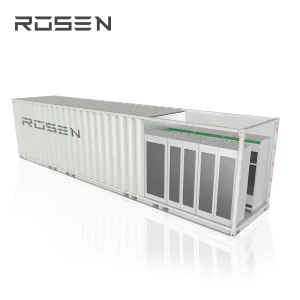
High-Efficiency Solar Battery System for Shipping Container Solutions

Still deciding? Get samples of $ !
Order Sample

Product Description

🔹 Basic Information
Model NO.
STF512100
Nominal Capacity
100ah
Cycle Life
500000h
Battery Type
LiFePO4
Nominal Energy
5.12kwh
Charging Cut-off Voltage
58.4V
Discharging Cut-off Voltage
40.8V
Cont. Charging Current
50A
Cont. Discharging Current
50A
Max Discharging Current
100A
Scalability
up to 5 Units
DoD
90%
Communication
Can/RS232/RS485
IP Grade
IP65
Installation
Cabinet
Load
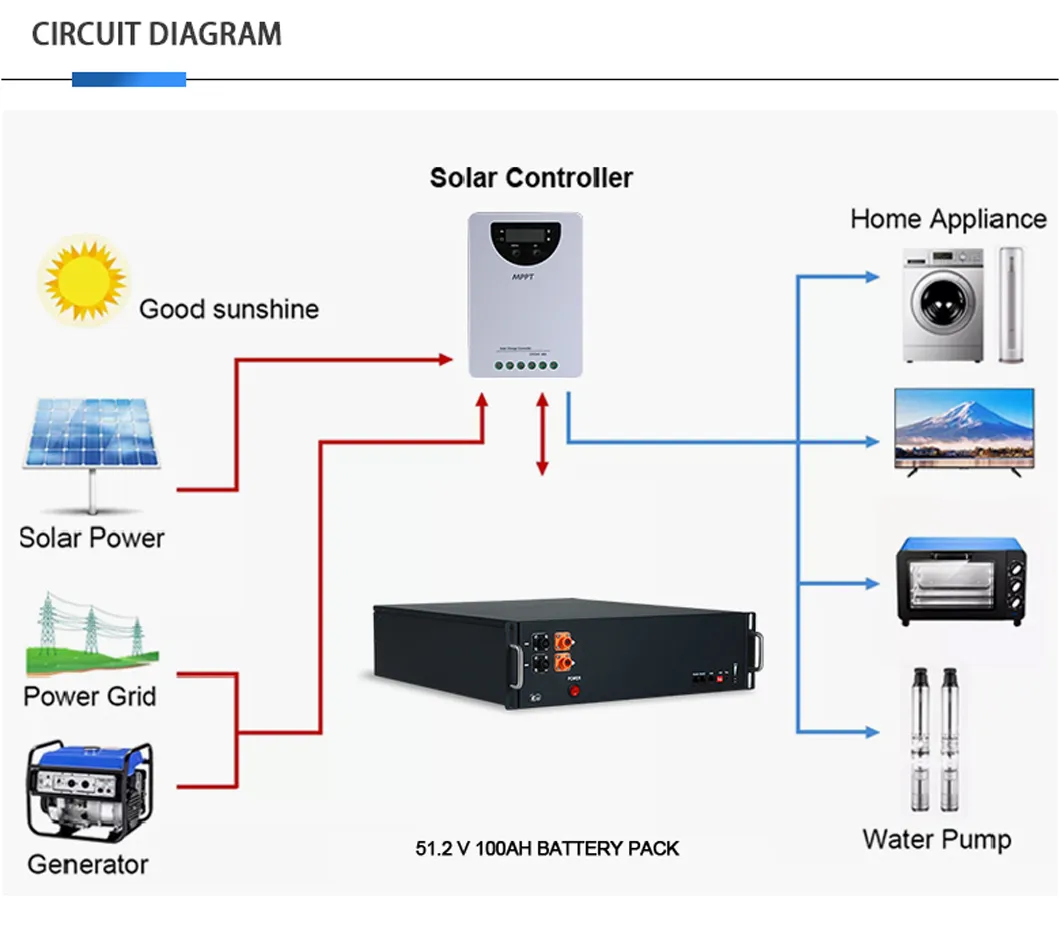
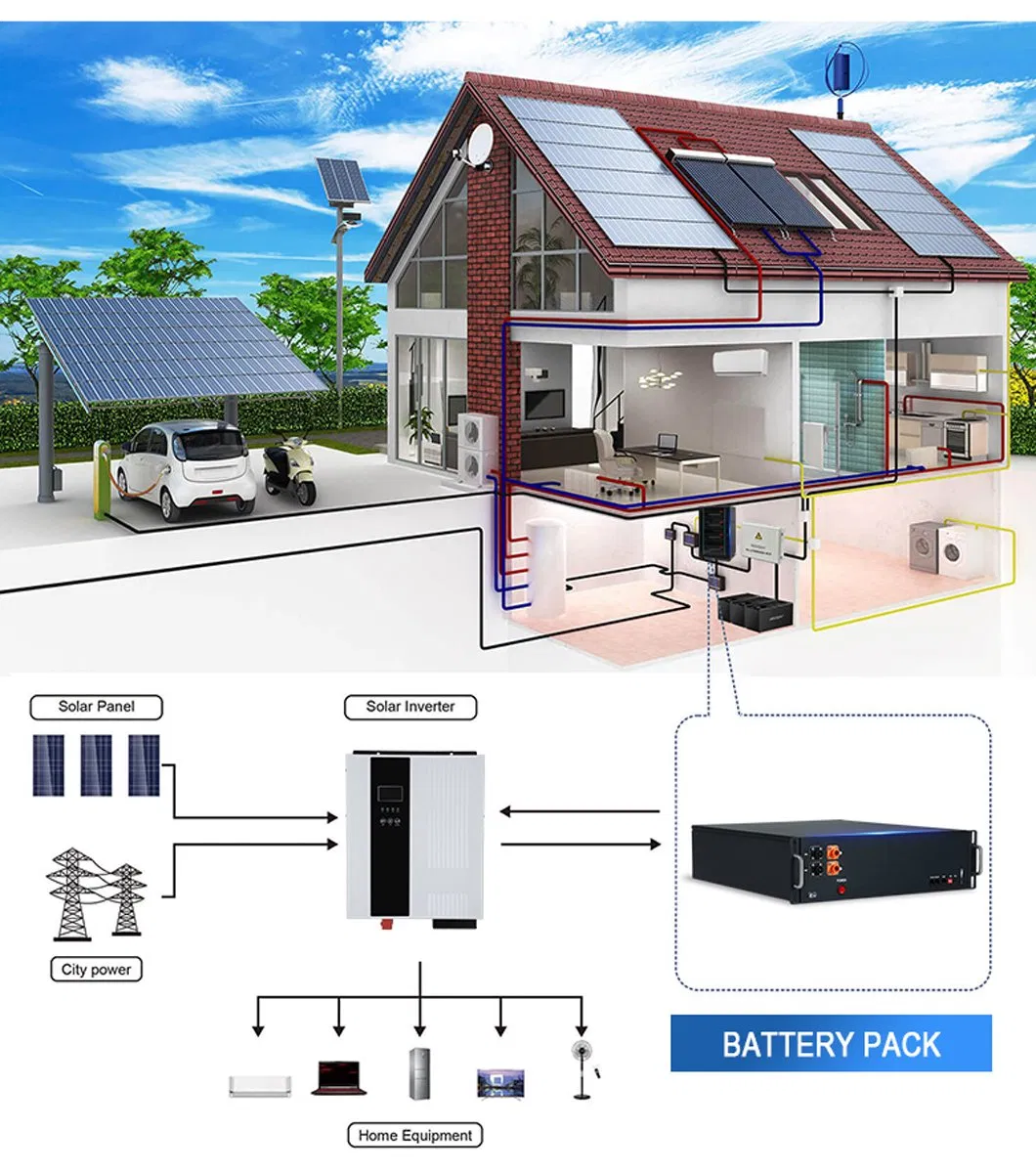
House Appliances, Factory Equipment
💡 Product Description
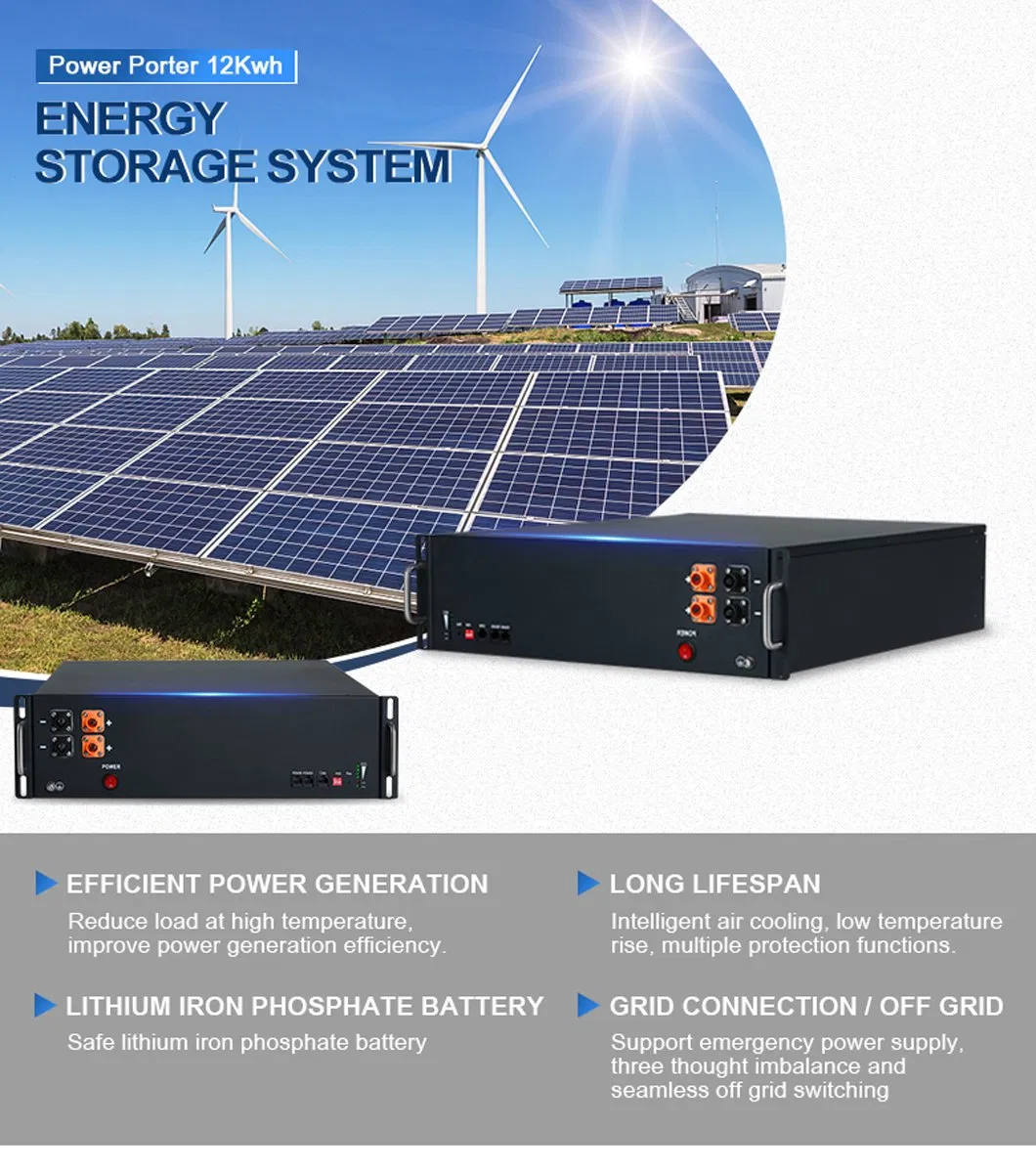
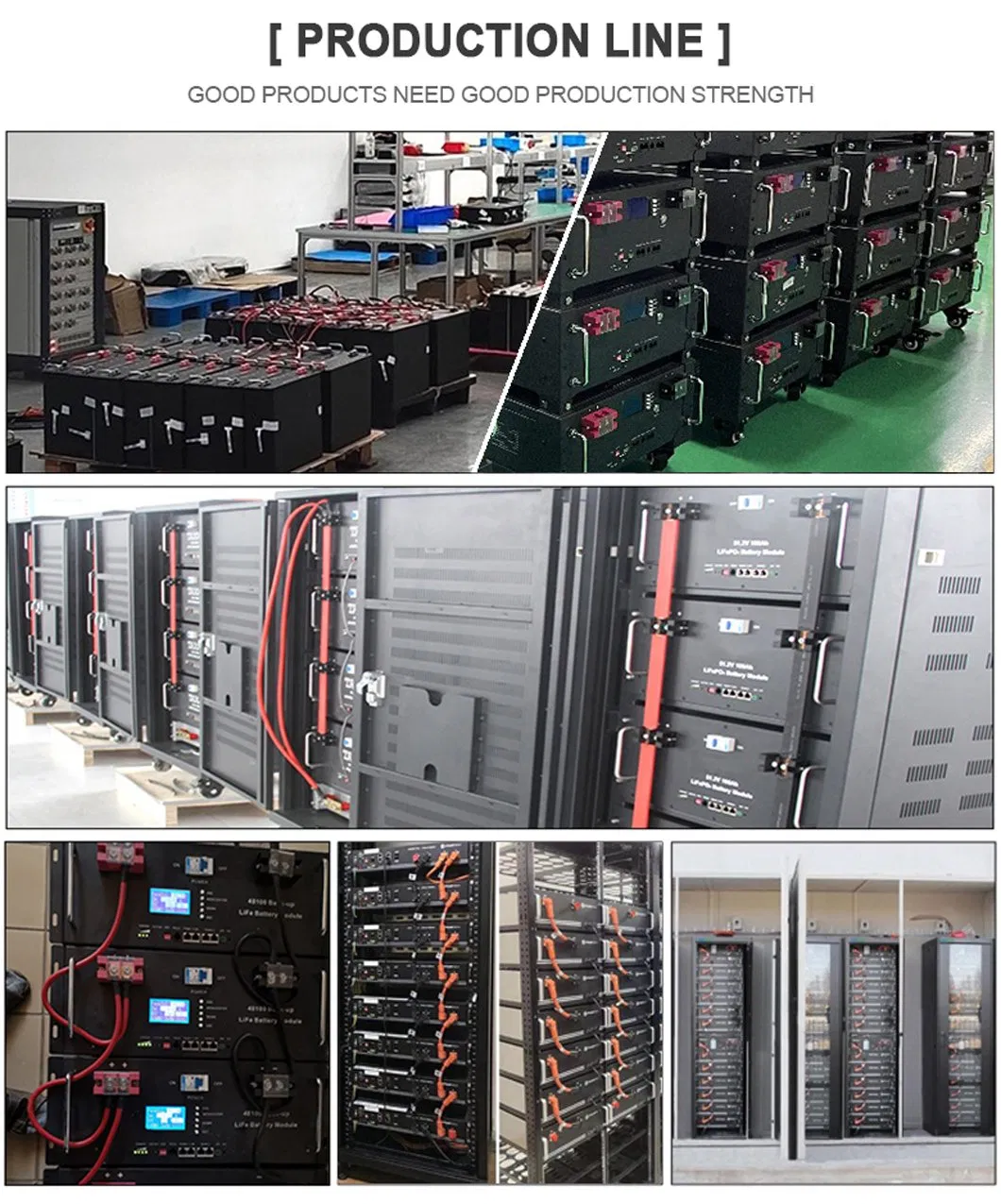
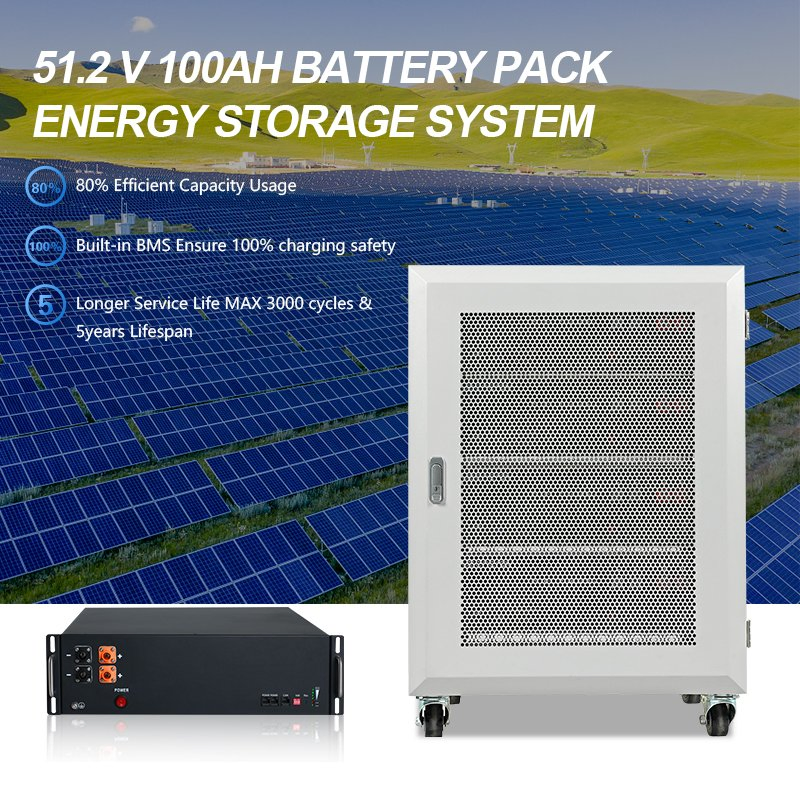
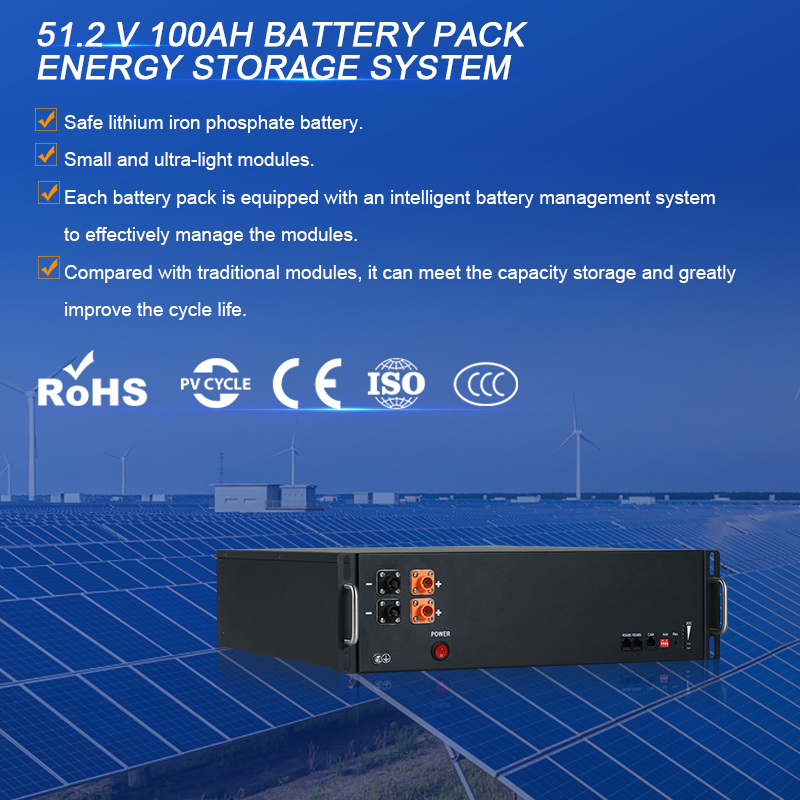
Safe lithium iron phosphate battery.
Small and ultra-light modules.
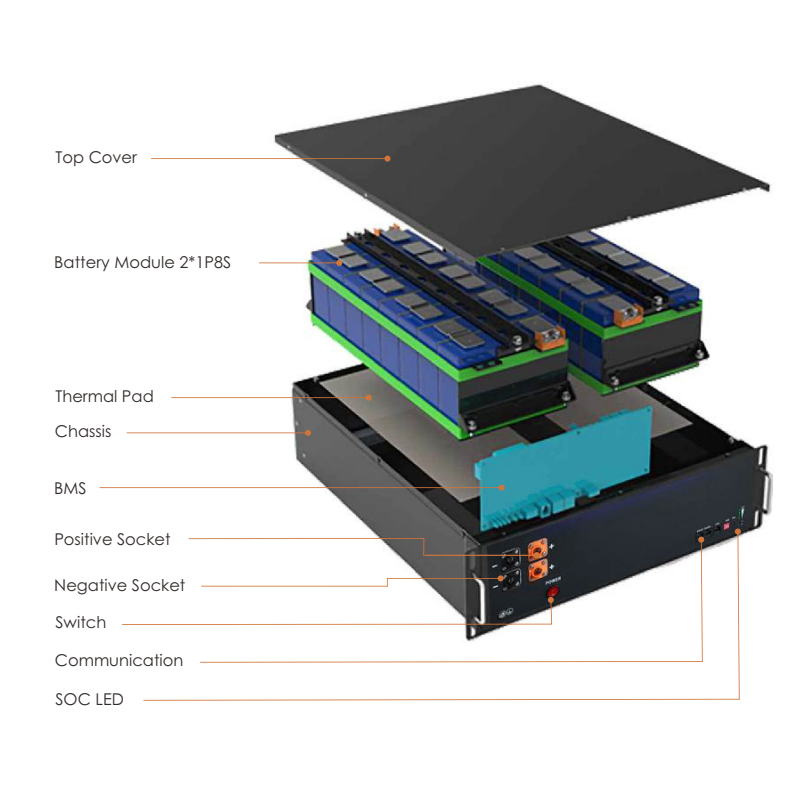
Intelligent battery management system (BMS) for module efficiency.
Improved capacity storage and cycle life compared to traditional modules.
📊 Product Parameters
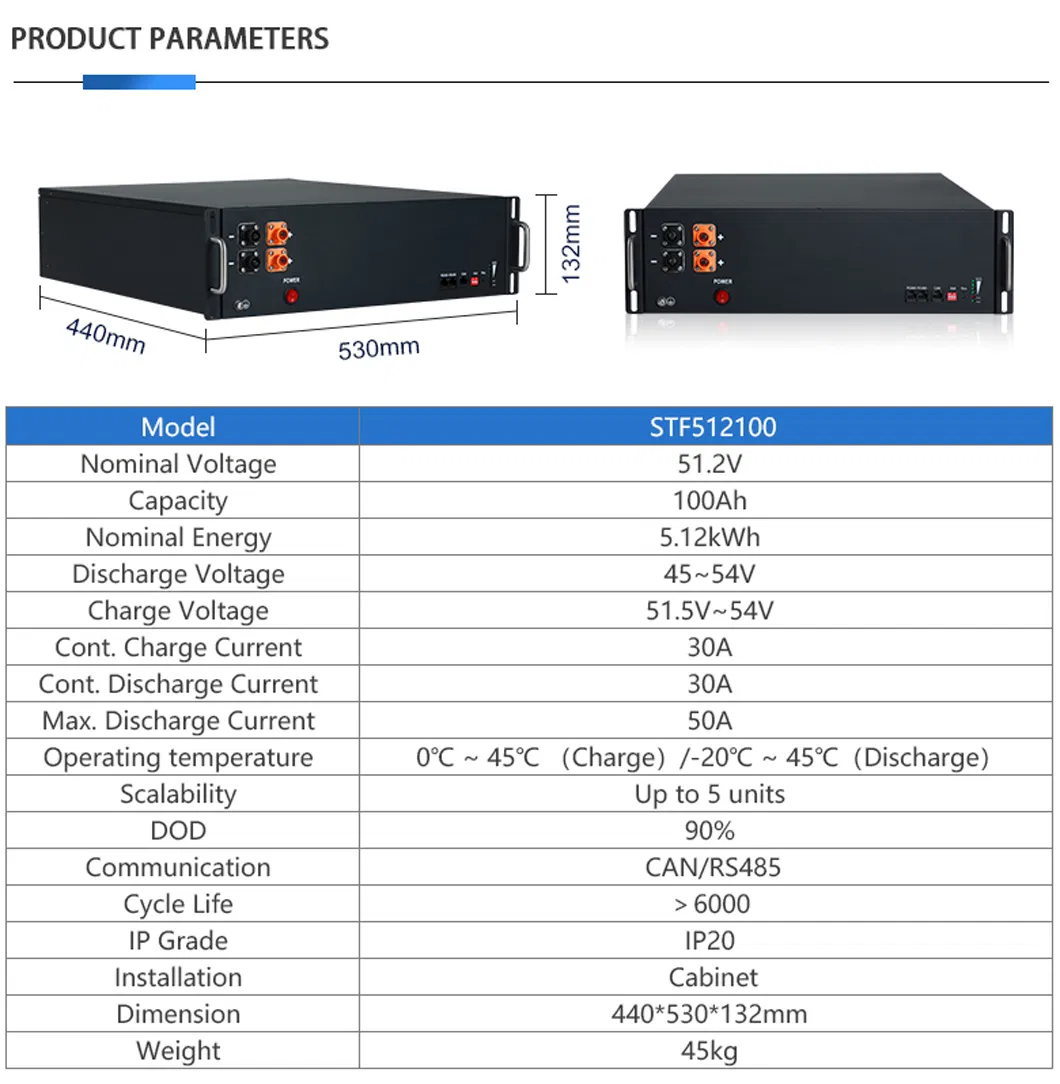
Parameter Item Specifications
Item NoSTF512100
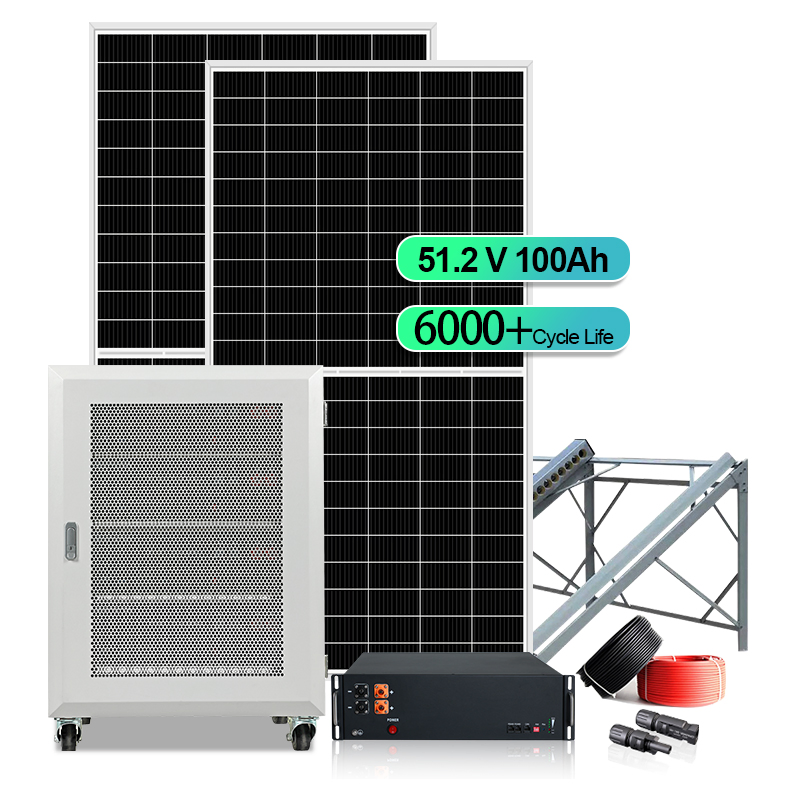
Nominal Voltage51.2V
Capacity100Ah
Nominal Energy5.12kWh
Discharge Voltage45~54V
Charge Voltage51.5V~54V
Cont. Charge Current30A
Cont. Discharge Current30A
Max. Discharge Current50A
Operating temperature0~45 (Charge)/-20~45 (Discharge)
DOD90%
CommunicationCAN/RS485
Cycle Life>6000
Dimension440*530*132mm
Weight45kg
⭐ Our Advantages
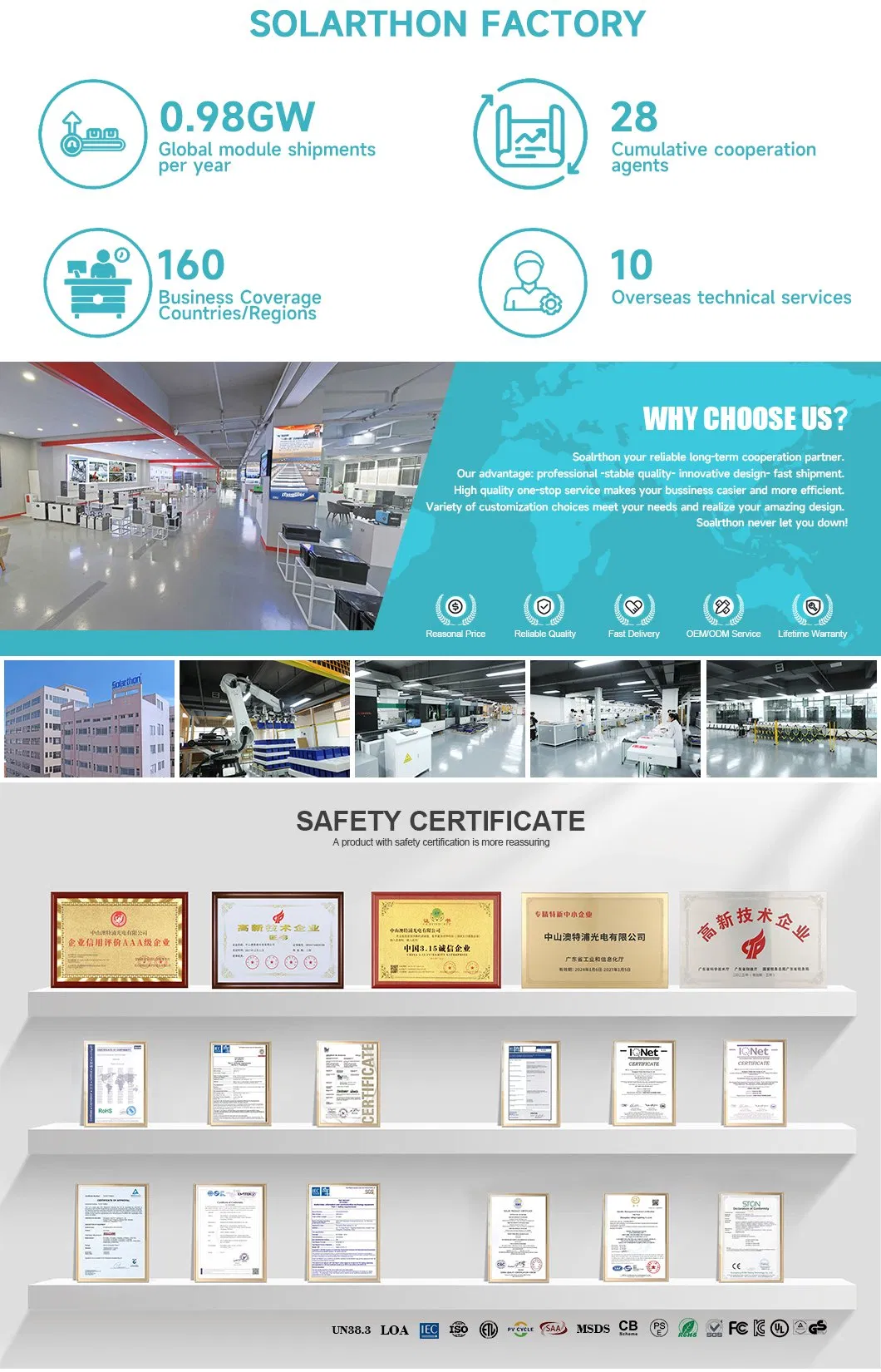
📜 Certifications
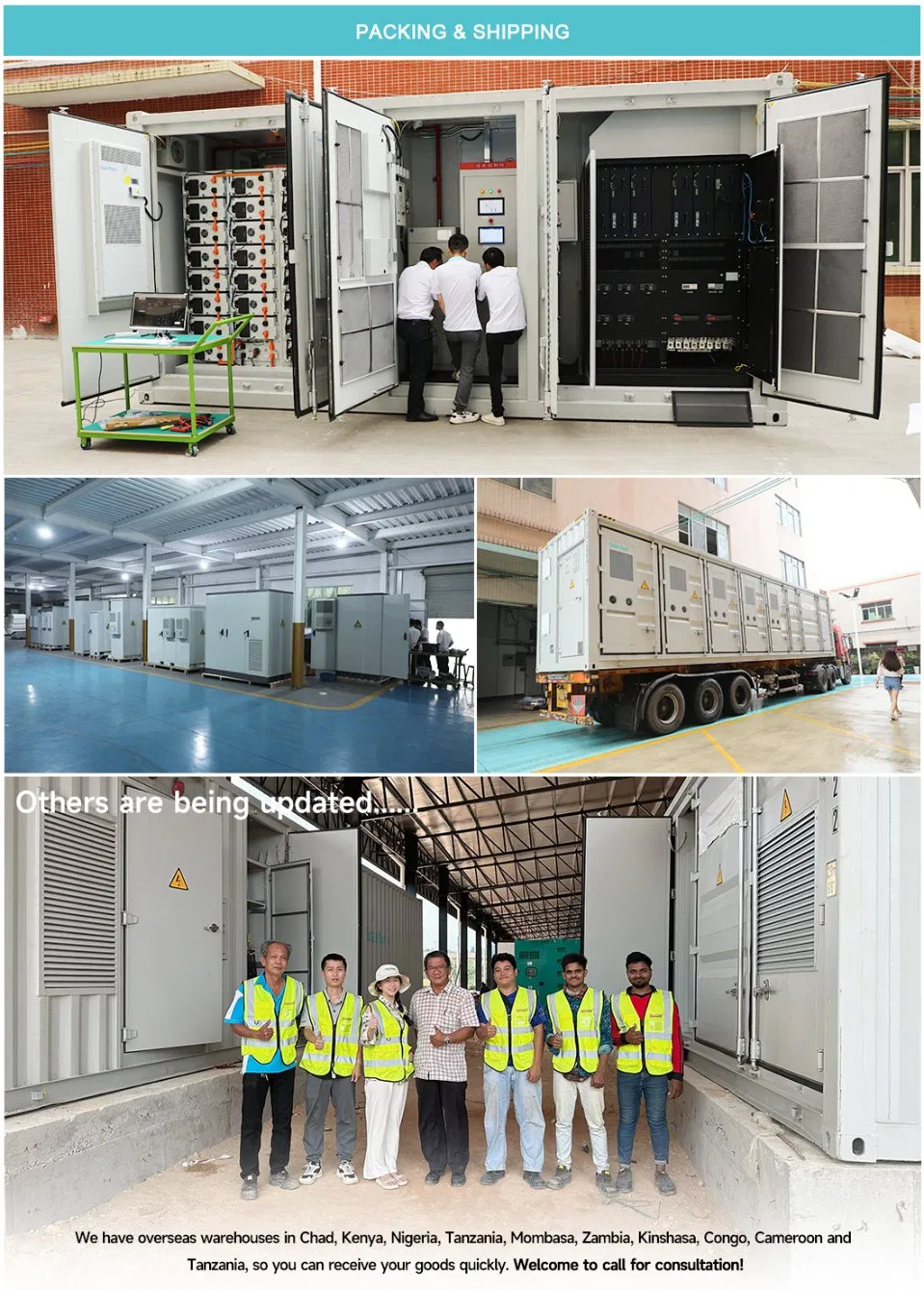
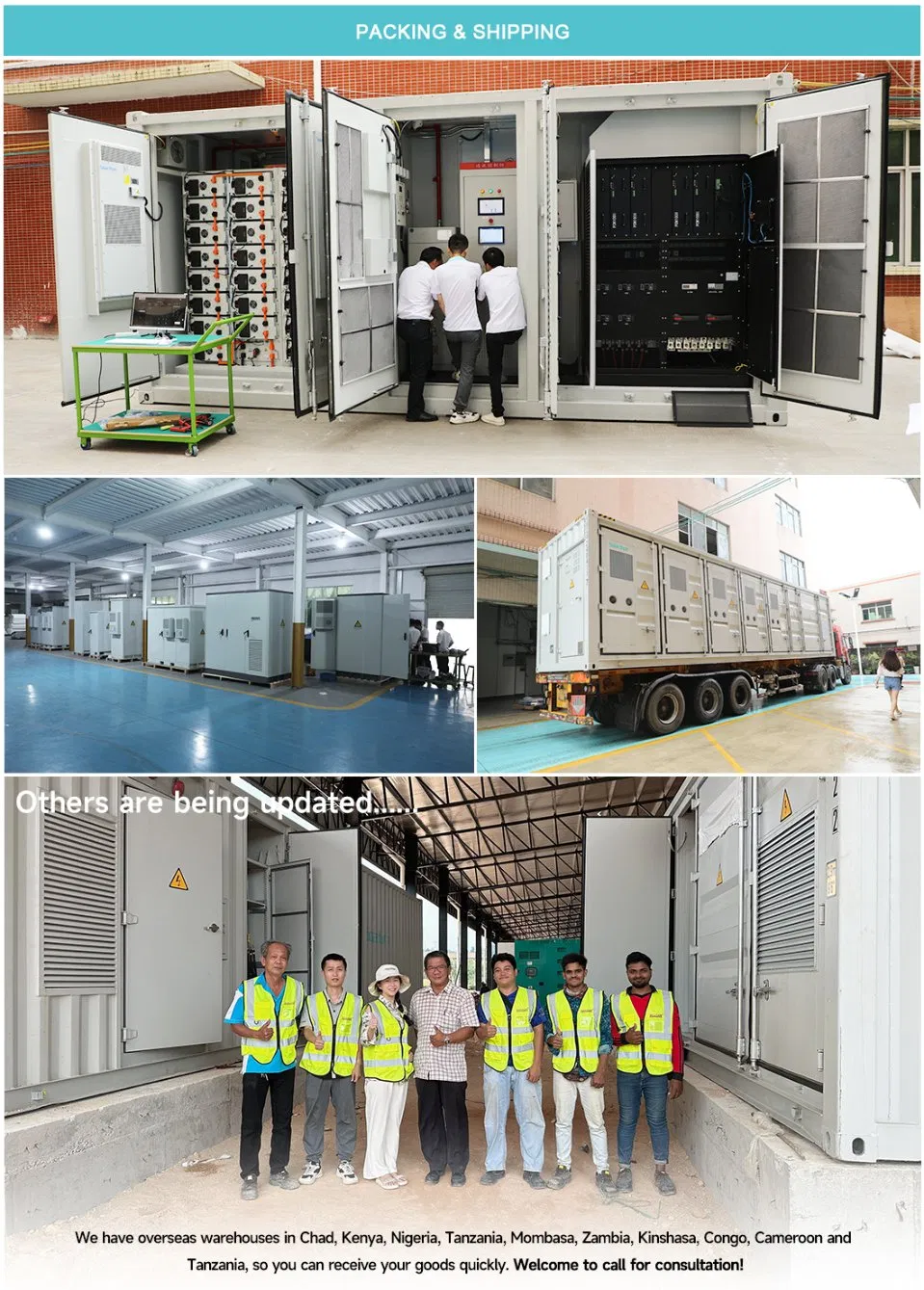
📦 Packaging & Shipping
❓ Frequently Asked Questions
Are your inverters pure sine wave output?
Yes, all are true pure sine wave outputs, providing power just as good as the public power grid.
What kind of output voltage and frequency do you provide?
Normally we produce inverters with 110V, 115V, 120V, 220V, 230V, 240V at 50/60Hz self-adaption.
What is the difference between pure sine wave and modified sine wave inverters?
Pure sine wave inverters have a low repair rate, long lifespan, and no harmonic pollution, making them environmentally friendly. Modified sine wave output can negatively impact appliances and cannot load inductive loads like air conditioners or refrigerators.
What appliances can your inverters handle?
Our inverters can be used for household, office, and agricultural appliances, including inductive loads like water pumps, refrigerators, and air conditioners.
How do I choose the right inverter?
Simply share your power demands and appliance types with us, and we will recommend the most suitable inverter for your needs.
What is the difference between 12, 24, and 48 volt inverters?
This refers to the input voltage from the battery bank. Higher voltages mean lower current, allowing for smaller wiring between the solar array and the battery bank.

Related Products